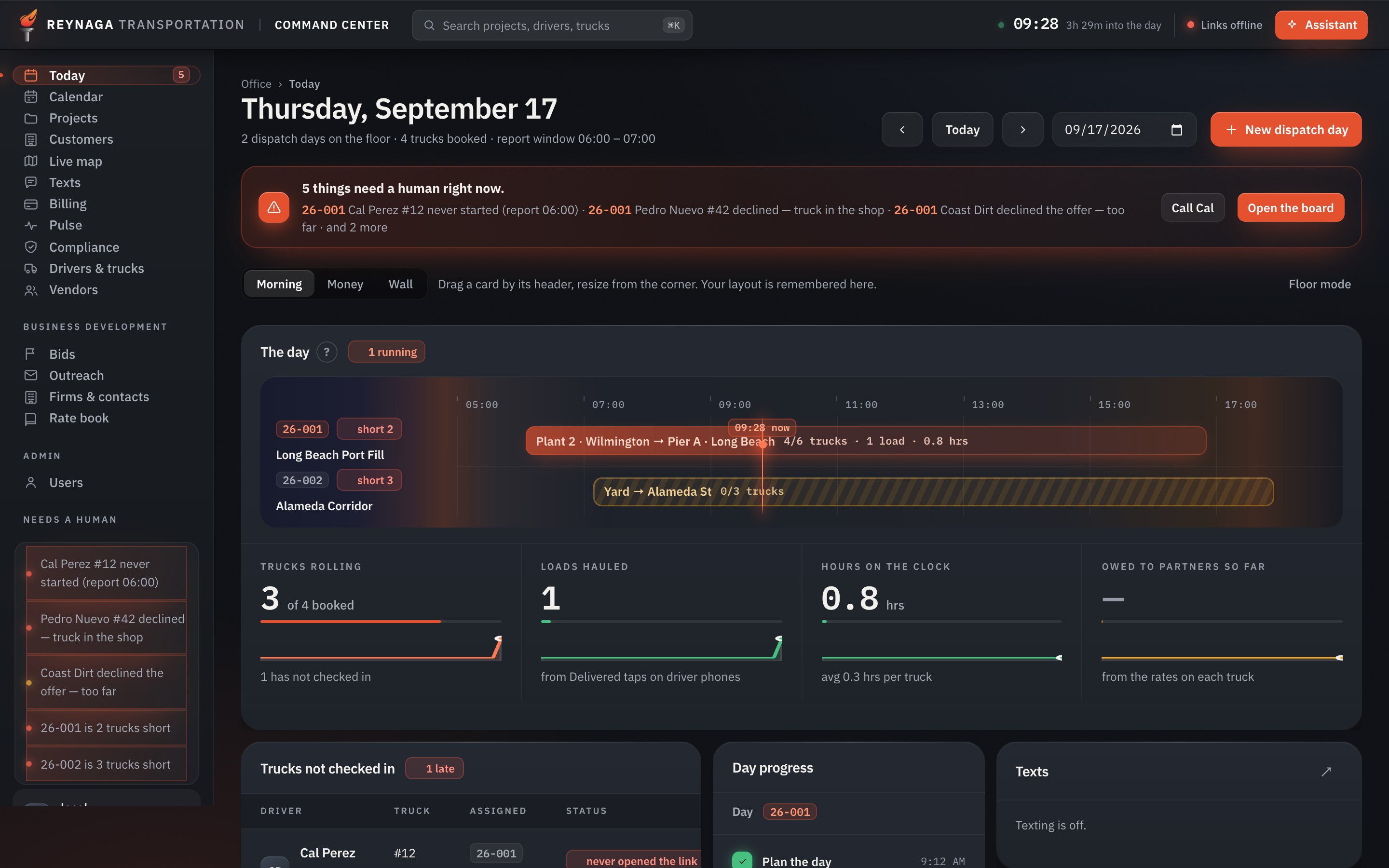
One screen for the day: who's rolling, who's short, what's owed. Drivers get their day by text and a private link on their own phone; vendors commit trucks from theirs. Rates, invoices, statements and margin follow the trucks on their own. No app store, no training week.
Today is the timeline of every dispatch, the four numbers that matter counting as they change, and the list of what needs a human right now — refreshed on its own, so it can live on a second monitor and the day is simply running.
Order lines, dispatch days, rate lines and change orders are asked one screen at a time; the answer writes itself into a sentence you read back before it saves.
One click texts each driver a private link from your company's own number. Vendors get order lines and offers by text and commit trucks — and name their drivers — from their own phone.
Every tap on a driver's phone — started, at pickup, loaded, delivered — lands on the board and the map as it happens. The needs-a-human list is the same on every screen.
Rest on a job number, a truck, a driver or a vendor anywhere and the facts that matter now rise under it. Click and it becomes the menu: text, call, re-route this one truck, swap the driver, reissue the link.
Every card on Today is a tile — drag it, resize it, pick Morning, Money or Wall, press F for floor mode on the big screen. The map and the texts pop out into their own windows.
Type three letters and go — a project, a truck, a driver, a thread, a screen, or the thing you do: new day, close the day, re-route. What you reach for most floats up.
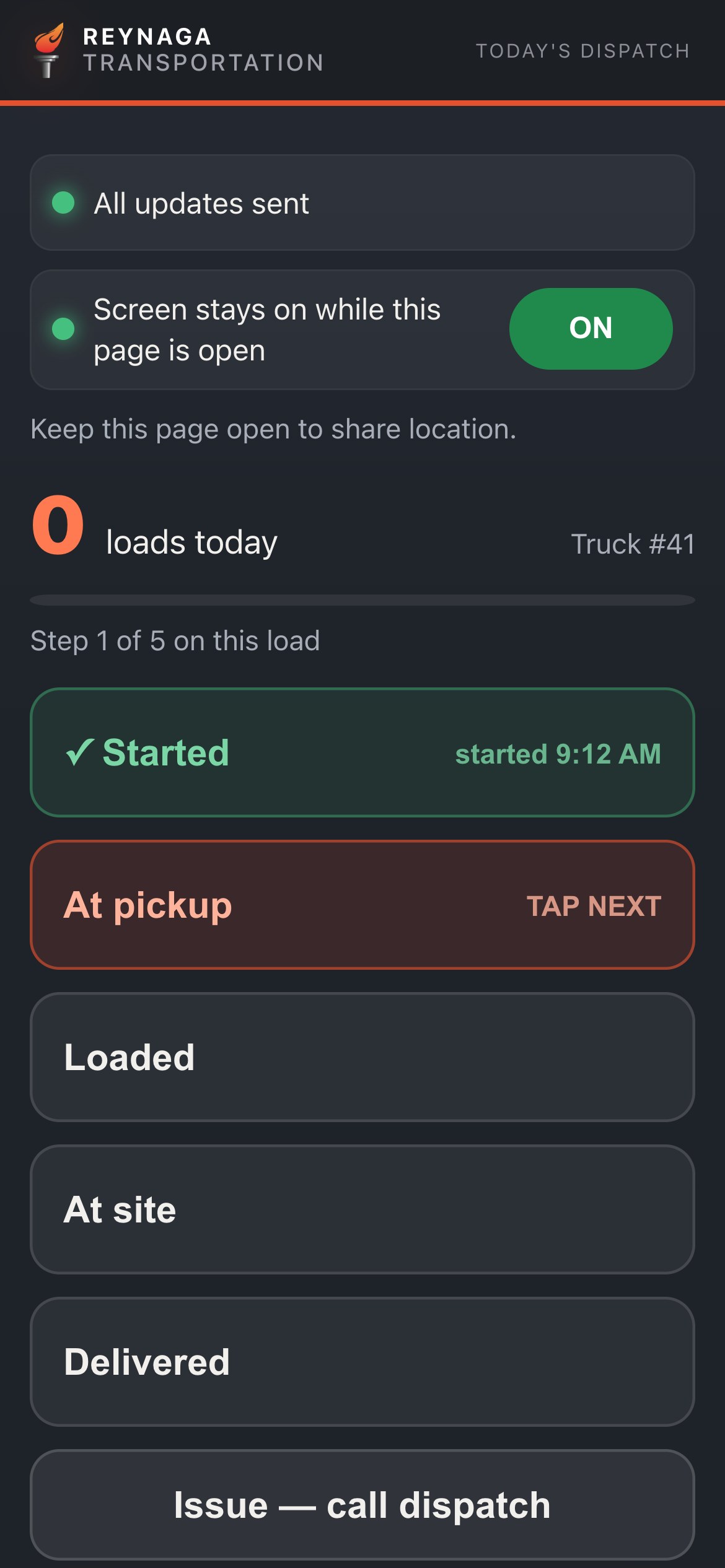
No app to install. The link dispatch texts opens the day: one big button per moment — I'll be there, START, at pickup, loaded, delivered, END — with the arc filling as the load moves. Location runs only while the day runs. The freight bill and the weight ticket are photos at the end; the tonnage reads itself off the ticket.
Once a phone has opened one link it signs itself in for good: tomorrow the driver taps the icon and the day is just there. Replies come back to the office as texts — "on my way", "can't make it" and STOP are read for you.
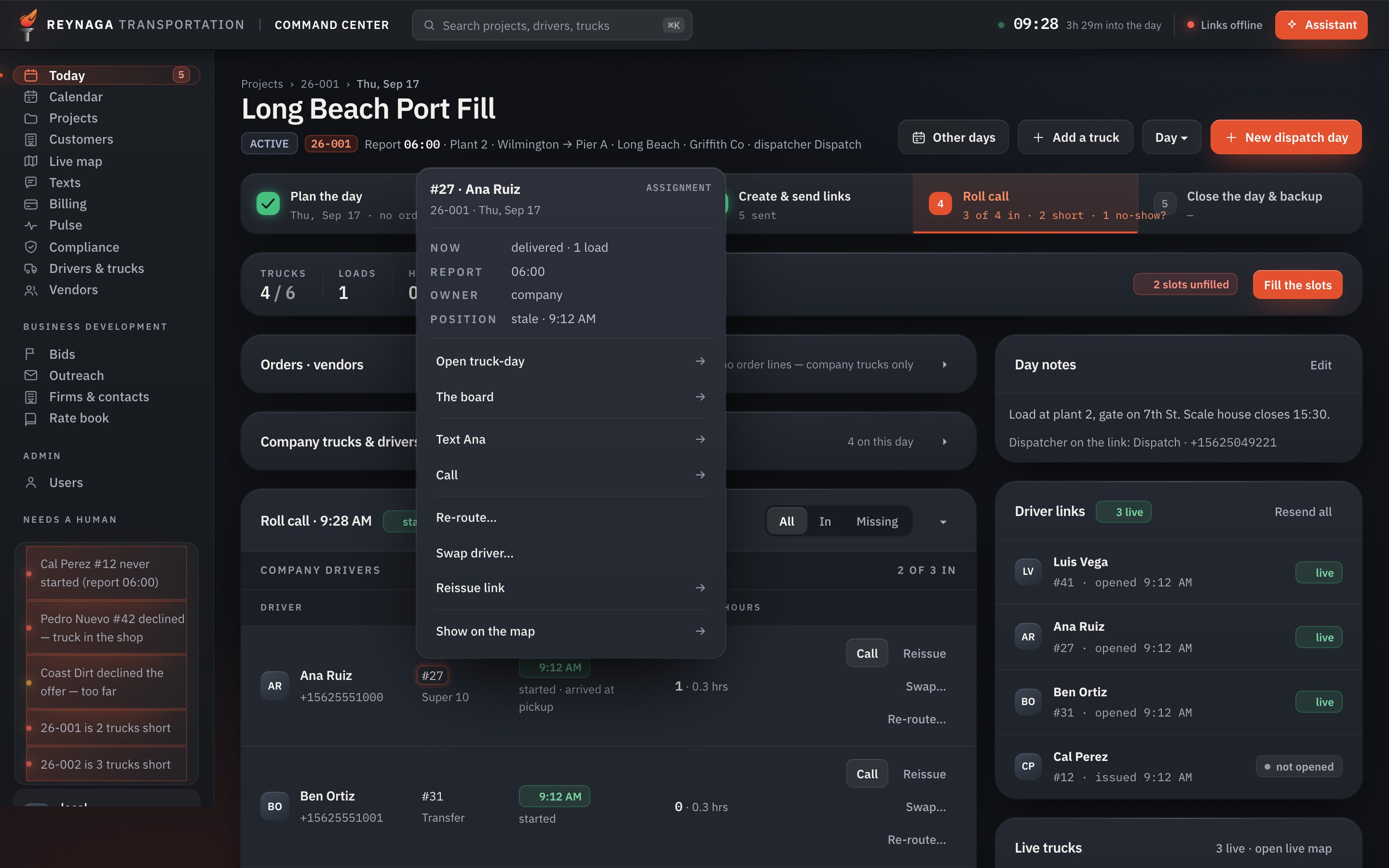
Five steps across the top — plan the day, trucks and orders, create and send links, roll call, close — and every card folds when its step is done. Drag a free truck onto a driver to assign it. Re-route one truck without touching the rest of the day. Status is a colour, numbers are monospace, explanations hide behind a small ?.
When the day is over, replay it: every tap, load and document on the trail, in time — the ten-second answer to "what happened with #27".
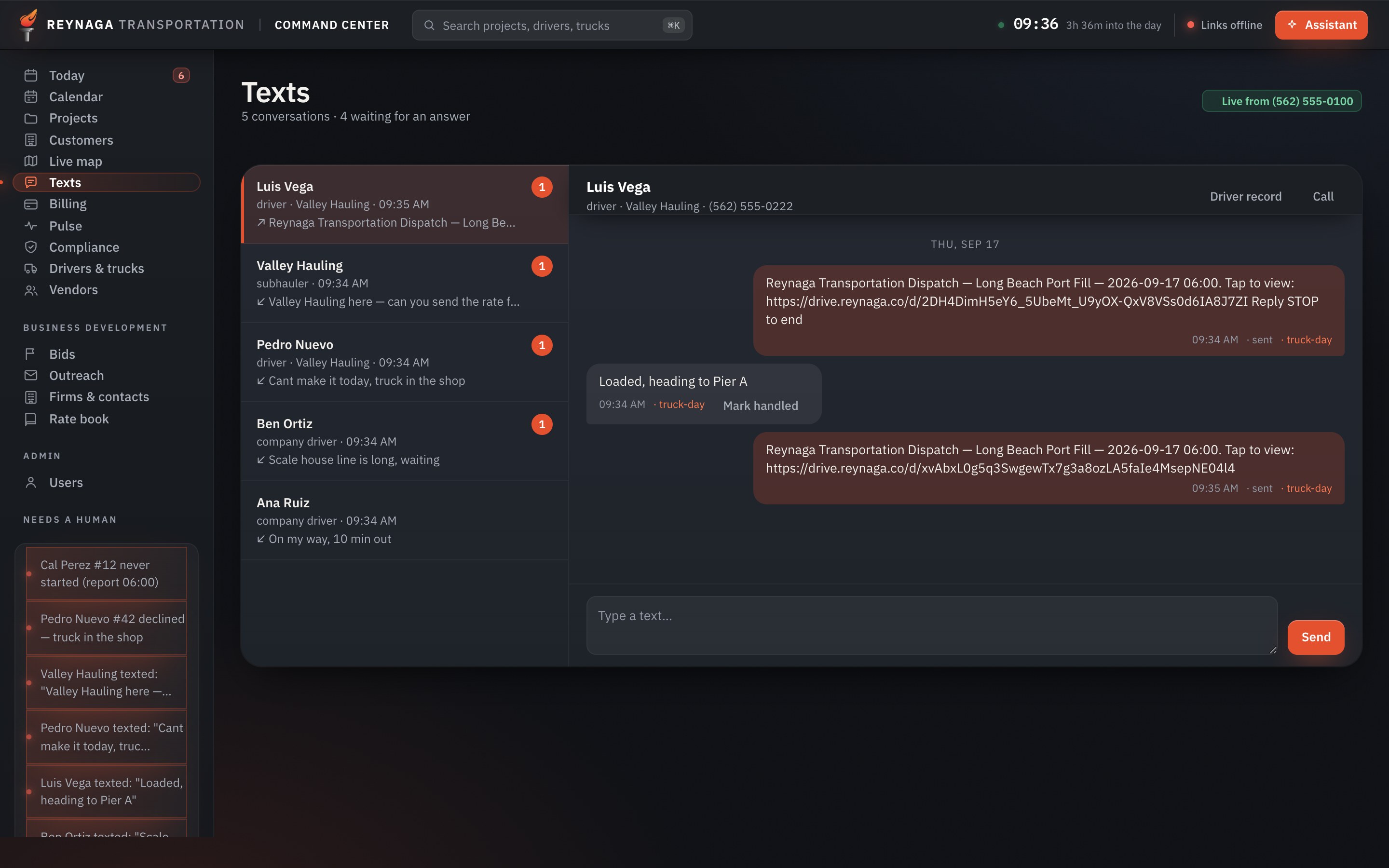
Every driver link, order line and offer goes out from the company's own registered number; every reply comes back to the same thread. STOP and START are honoured automatically, consent is recorded, and a public opt-in page does the paperwork the carriers ask for. What needs a human says so.
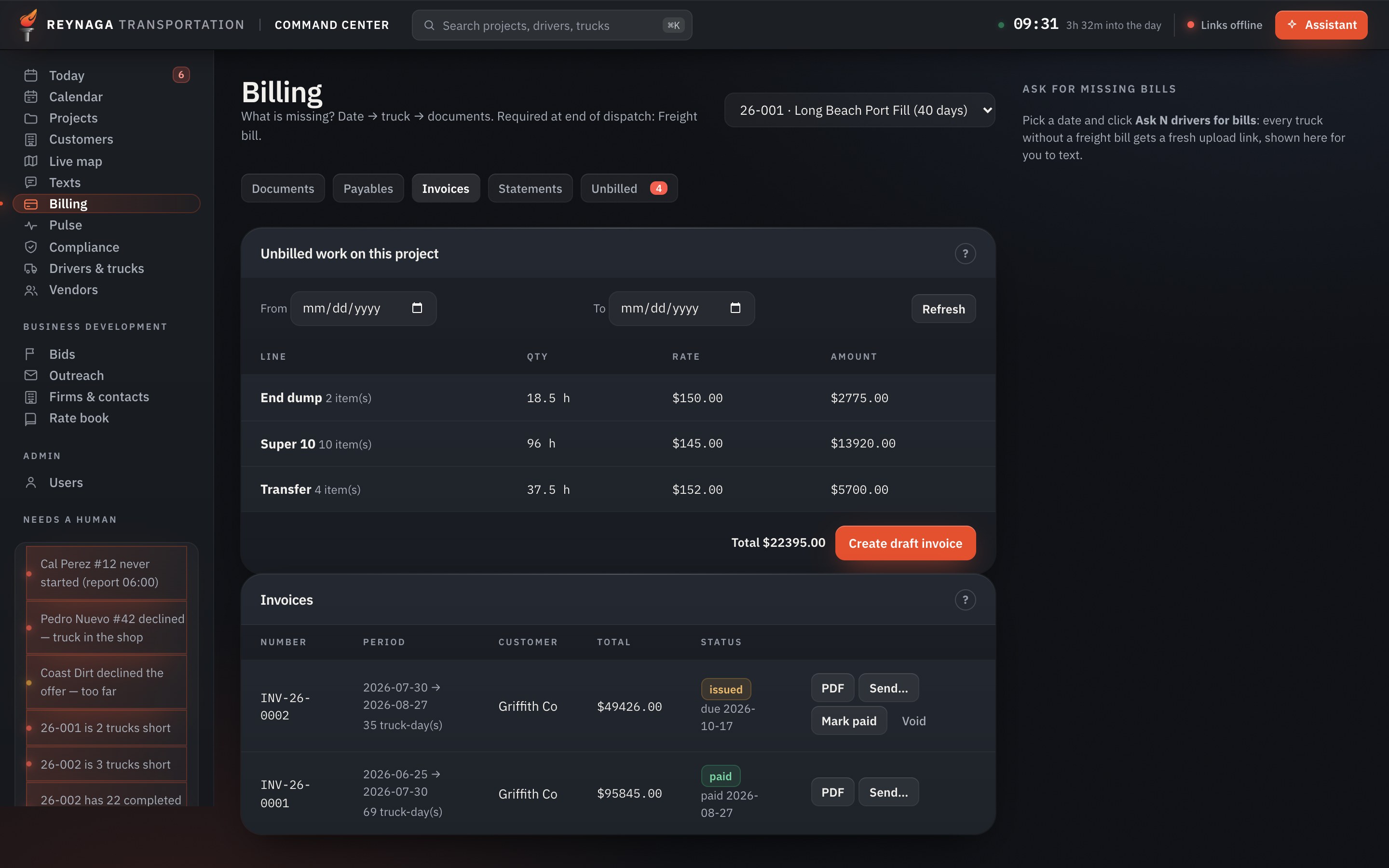
A customer agreement holds the rates — by truck type and shift, Saturday and Sunday rates, minimums, fuel surcharge, the yearly escalation — and every project inherits them. Invoices and vendor statements are built from the truck-days themselves, so nothing is billed twice and nothing is missed. Margin per day, per project, as it happens.
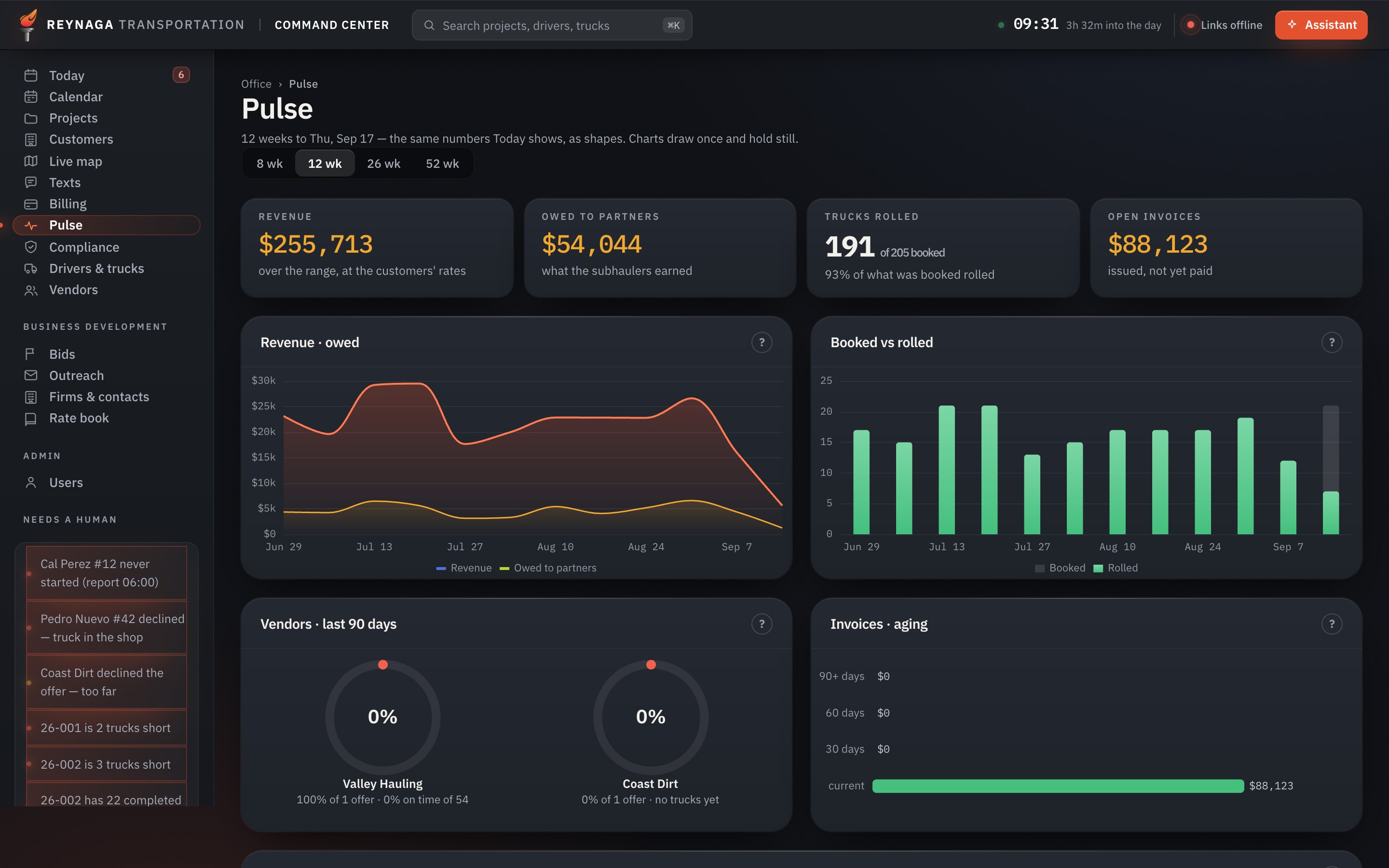
Pulse shows the same numbers over weeks. Certified payroll comes off the same records. Billing documents are kept seven years, by design.
A vendor builds their own profile from their phone: the W-9, registrations, licences and medical cards are read for them and a person confirms each one before it lands on the record. Requirements and expiries are enforced where you say — a missing card blocks an assignment, or only warns; your rule. Offers go out by text; units are held until the profile is complete.
Winning the work lives here too: bids read from the documents, outreach from a connected mailbox, a rate book, quotes that become agreements.
Every company gets a private instance — its own address, its own texting number, its own brand on every screen and every text, its own rules for what blocks and what only warns. We set it up with you, load your drivers, trucks and vendors, and walk your first day through it.
Book a demo